Showing posts with label H Rider Haggard. Show all posts

Wednesday, 31 December 2025

December Reading Summary

There were 8 novels completed this past month, one of them a graphic novel.  

From 1985, Bulmer's 121 page novel Omens of Kregen continues the main line of two plots that have been on-going for several volumes now.  Firstly, the battle for freeing Vallia from its enemies from within gets settled, with several key battles being won and the rogue "king" of the northlands vanquished at last.  More importantly is Dray Prescott's return to the lair of the witch Csitra and her evil spawn Phunik.  Dray and Seg join yet another doomed treasure seeking expedition into the hellish cave system of Coup Blag, a trap-laden maze that would challenge the greatest player of the Lara Croft games.  Hardly anyone ever comes out alive, and this expedition is no exception.  At long last, however, the witch is finally dealt with, and Dray now needs to reunite with his own expedition, which was separated when they were attacked on route to the caves.  However, at the very end of the story Dray is recalled to face the anger of the Star Lords.  We will have to wait till next month to see how that encounter turned out.  A good entry in the series, finally closing some of plot lines that have been around for a long while. 

Haven of Darkness is from 1977 and is 173 pages long.  Two story threads eventually intertwine in Tubb's 16th entry in the Earl Dumarest series to form a highly entertaining novel.  The thread with Dumarest is pretty much like so many of his other adventures.  For one thing he starts out on a run down planet with virtual slave labour.  He is being hunted by the Cyclans, and there happens to be one on that planet.  To earn money to hire computer time to find the location of Earth he has a knife fight with a viscous killer.  But we are soon off that planet and en route to another one, again familiarly traveling in a beat up old spacecraft trading goods.  His arrival on planet 2 allows his story to unite with strand number two.  That story features a beautiful woman on the high council of a peaceful planet, but a planet where it is only safe to travel during daylight.  With two suns, a unique event termed Delusia causes hallucinations when they align, and after dark sudden death comes by the mysterious creatures that rule the planet then.  A pact has been arranged between the human daytime inhabitants and the aliens that take over at night.  One man is threatening that pact by attempting a coup.  Dumarest is just in time to put a stop to it.  This story has a different ending; it appears that Dumarest is going to stop off for a time, something that hasn't happened yet in this series.  Perhaps we will learn more about the mysterious deadly night inhabitants in the next story. 
 
Josh Kirby did the cover art for one of the editions. 
 
And now it's on to Delphi Classics!  I keep buying single Kindle novels but I get so engrossed in reading the classics that I seldom have time to consider reading something more contemporary.  So I am limiting myself to four classic authors per month, with any time left over for more recent literature.  We'll see how that works out.
 
First up were the tales of the Brothers Grimm.  The first English translation of the fairy tales was published in 1826, 55 stories in all told by Edgar Taylor.  By no means complete, this first foray into the collection covers most of the basic tales many of us grew up with.  The Cinderella story is the real deal, with the step sisters cutting off a big toe and shaving their heel to fit into the slipper.   Of course at the time the Brothers assumed they were collecting only German stories.  Not till later was it even suspected that most of these tales had origins far beyond Germany and even of Europe, many of them coming to us from the Near East and India.  Many of the tales share similarities, for instance three sons setting out to seek their fortune, with only the youngest succeeding.  We meet many kinds of folk critters, from elves, witches, talking animals, evil step mothers, imps and kindly old people who give magical gifts to the right person.  Having read the complete Joseph Jacobs collections (see the books read blog entry for May 2025), many of these are very familiar in some form or other.  I may not read more into this collection for a while because of this.  Still great fun, mostly for all ages.
 
Next came one of my favourite books from high school reading days.  H Rider Haggard is still a favourite of mine, and his first Ayesha novel, She (1886) is the one that helped start possibly the biggest fictional tradition in literature--the fantasy adventure novel.  Taken up by Edgar Rice Burroughs (whom I read as a youth before I discovered Haggard), and even influential with Tolkien's writing, this remains one of the great adventure novels of all time.  Lasting 28 chapters, the first three are taken up with preparations for a great journey into unexplored East Africa.  Chapter 4 is the great storm that washes the heroes upon the beach, from which they must make their way into the interior, first by small boat, and finally as prisoners.  Chapters 5-10 tells of the adventures they underwent (4 men) in the great swamp that must be crossed, and the terrible fever that ensued for some of them.  We finally meet She herself in chapter 13.  The setting is in an abandoned Kor, a vast group of cities built thousands of years before the Egyptians built their great monuments.  Canals that once reached to the sea and vast hollowed out mountains are only a few of the achievements of this once great society.  It ended in a plague, so that the ruins have not been destroyed by war or natural disaster, but were left to age more naturally.  We are given some information about this ancient society, whose survivors fled and likely founded Egypt.  She herself is 2000 years old when we meet her, and Kor ruled long before her time.  We spend several chapters among these caves and ruins.  One of the more interesting things to come from the novel are the discussions about philosophy and religion that She and Holly, one of the male adventurers, have.  She wins most arguments, as she has had a lot of time to develop her theories of religion and philosophy.  Her reason for wanting to live for so long is so that she can be reunited with the reincarnation of her one true love.  Leo fits the bill nicely, the other main member of the adventurous party.  In chapter 24 the journey to the great life-giving cave is made, and the final chapters tell how Holly and Leo managed to escape their doom, something that Ayesha was unable to do.  She tried to double dip in the flame of life, and things did not go well at all.  Great fun to read, with excellent pictorial descriptions, some lively and interesting dialogue, and main characters not too hard to swallow (compared to many modern fantasy novels).
 
This is the edition I read as a teen. 
 
The Maltese Falcon was first published in 1929.  This was my first reading of the Dashiell Hammett novel.  I had one major problem while reading the book: I could not help hearing Bogart's voice in the part of Sam Spade.  Spade looks nothing like Mr. Bogart, as he is blonde and has features that make him look almost satanic.  But as Bogart speaks many of the same lines, it is his voice I hear.  Same with the fat man, played by Sidney Greenstreet, and the kid, played by Elisha Cook, Jr.  I have seen the film so many times that the actors' voices speak the lines while I read.  The film does a credible job of making the story and characters come alive, too.  A bit more time is spent in the book explaining what exactly the Falcon is, but otherwise things pretty much follow the course of the movie plot.  Of course there are many more subtleties in the book, and it is a must read for lovers of the film.  Hard-boiled detective fiction and Noir film itself owe so much to this very story.  An easy read and great fun!
 
Kwaidan is a series of collected Japanese ghost tales translated and retold by Lafcadio Herne and published in 1904.  Once again we have a top knotch film of the book, or at least some of its stories, this time from 1964.  I will mention a few of the best tales.  The first story, "Mimi-Nashi-Hoichi", is the first story told in the movie version as well.  It is a great story about a blind ballad singer who is requested by a powerful lord to visit his palace and sing of times before his clan was wiped out by enemies.  The film version calls it "Hoichi the Earless," perhaps giving too much of a hint of what is to follow.  An all-time great ghost story.
"O-Tei" tells about a young couple engaged to be married, but the girl dies before it can happen.  She makes him a promise on her death bed, and in a creepy scene manages to fulfill her promise.
"Of A Mirror and a Bell" is somewhat humourous, but "Mujina" returns to the pure horror format, as a man wandering late at night encounters not one but two spirits, either one of which would be enough to destroy a man. 
"Jikininki" tells of  a priest's visit to a village just when their head man had died.  The villagers, by tradition, leave the village for a night, but the priest agrees to remain with the body.  An evil spirit comes and eats the corpse and the food left as offering.  The priest is able to solve the mystery of the hungry ghost, freeing the village from its curse and rescuing the man who had been cursed.
"Rokuro-Kubi" tells of a priest's encounter with five evil spirits who wish him harm.  When their heads separate from their bodies at night he listens in to their conversation and thus learns how to thwart them. The story continues in a bizarre fashion with the head of the lead rogue fastened to the priest's cloak, until a robber takes it from him.
"Yuki-Onna" is another of the filmed stories, this one a winter scene.  A woman in white saves a man from freezing to death during a bad snowstorm, but makes him promise not to ever tell what has happened.  Years later he opens his big mouth and tells his beautiful never-aging wife.  As usual in such fairy tales, there is no penance for the mistake, only sorrow and hardship.
"Aoyagi" tells the sad tale of three willow trees, two old and one quite young.
"The Dream of Akinosuka" takes us deep not only into the dream world, but the story leads to a further discussion of ants.  Yes, ants.  Don't ask yet.  Just read.  This is a pretty good story.
"Horai" is a brief story that reminded me of some Dunsany tales.
The book is rather short, and perhaps to lengthen it enough for publication he includes three essays: Butterflies, Mosquitoes and Ants.  The butterfly chapter discusses butterflies in Chinese and Japanese lore, and is quite fascinating.  A few more tales are included as well.  The mosquito chapter is fairly amusing, as Hearn discusses ways of eliminating the pests, which particularly bother him where he lives.  Then comes the chapter on ants, one of the more unique essays I have ever read.  The author compares ant society to human, wondering if humans will ever learn to work together the way ants do.  A good followup to reading this chapter would be to read T. H. White's 2nd volume in his Arthurian tales, The Queen of Air and Darkness, the darkness referring to life as an ant.  All in all, a most remarkable book, and highly recommended.  Make certain that the three extra chapters are included in the edition read.
 
One of many cover editions of this still popular book. 
 
In 1986 writer Frank Miller collaborated with artists Klaus Janson (inker), Lynn Varley (colorist) and John Constanza (letterer) to create the new and much darker Batman.  Batman: The Dark Knight Returns was a 4 series comic that changed forever the direction that comics would go.  My edition was the 30th anniversary one, with all 4 comics contained within one graphic novel volume.  The comics spawned the new Batman series and spinoffs.  This story features a Bruce Wayne who is now 55 years old and has been out of the loop for some 30 years.  Most civilians have forgotten him or think he was just a myth.  His comeback is at a time when Gotham city is at its lowest, most crime-ridden era.  He is soon joined by a new Robin, a 13 year girl gymnast.  Superman plays a major role in the story, and even Green Arrow makes appearances.  The story is darker than almost anything I have ever read.  Batman is hunted as a cruel vigilante by the police, and public opinion is turned against him.  Gangs of young people calling themselves Sons of Batman roam the streets acting against crime in his name.  The city is a complete mess, and then things get worse.  The Joker escapes prison and goes on a major killing spree.  Superman fights against Russia in a war, but after defeating them they unleash a nuclear bomb, a neutron bomb, that devastates the planet.
Many people still think that Batman is a superhero; he is not, and he has no superpowers.  His inventions are all science based, his luck in escaping dangerous situations is supreme, and he has good help.  But he is human.  I was never much into superheroes in my day.  My comic reading trended towards Tarzan, Conan, Magnus Robot Fighter, and their ilk.  The only other comic I have read on this return of Batman level of literary value and artistic quality has been The Watchmen.  Both graphic novels are well wroth seeking and reading.
 
Finally comes a novel from 2004 (trans. English 2007) by acclaimed Japanese writer Haruki, Murakami called After Dark.  It's a strange novel and hopefully far from the best by this prolific author, whom I am just discovering.  To me it seems like one of those novels that could fool readers into thinking they are reading something profound, when actually it's all rather prosaic with a few puffs of mist and smoke to dazzle us.  A 19 year old girl spends a long Tokyo night in family restaurants.  A young man who barely knows her and her sister invites himself to her table and they talk.  He is a jazz trombone player on his way to an all night practice session.  This meeting leads to most of the other events that occur in the novel, which is fairly short and easy to read.  I find very little to recommend this novel, though it won't stop me from trying a few of his more famous ones, such as Norwegian Wood and The Wind-Up Bird Chronicle.  While it's common for great authors to write works of lesser quality, it's a bit disheartening when one of them is the first one read.  The novel might work for younger readers who are ready to try something different than young adult novels or Harry Potter.  A 19 year old reader could possibly find this novel mysterious and fascinating in so many ways.  But not this old buzzard.
 
I read the Kindle edition. 
 
Sometimes at the end of a month I have a day or two extra, not enough time to begin a new novel.  In the past I have used the Oz stories and other quick reads, or the massive volume of fairy tales by Joseph Jacobs, taking many months to complete.  This month I began reading Stephen J Gould's 8th book of science essays, called Leonardo's Mountain of Clams and The Diet of Worms, compiled in 1998 from monthly articles he writes for Natural History magazine.  In the past I have read some of his earlier collections and found them fascinating and highly readable.  I don't know why I got away from them, but I am happy to be back.  The book is divided into six sections, and I read section 1 which contains three essays.  There is also a long intro by the author.  "The Upwardly Mobile Fossils of Leonardo's Living Earth" discusses how the great thinker discovered the fact that fossils, often found on high mountains, were once beneath the sea.  Leonardo's greatest efforts were towards proving the connection between man and planet, something he worked on till his dying day but never solved.  His fossil discovery, however, proved half of his theory.  Quite a fascinating read.  "The Great Western and the Fighting Temeraire" discusses how technology often progresses at the cost of earlier ways of achieving goals.  But of even greater interest is his discussion of Turner and artists in general, and how they are remembered as compared to great engineers or scientists.  Though a fun argument to read about, Gould forgets the fact that many artists, musicians and writers are totally forgotten today, though were once the talk of the town.  Finally comes "Seeing Eye To Eye, Through a Glass Clearly."  Here he points out how the invention of the aquarium not only popularized the study of sea and lake creatures, but how our point of view affected the study of natural history.  Seeing fish eye to eye was a new perspective and it revolutionized how we study such creatures today.  Before that, scientific illustrations usually showed the sea creatures looking like they do, but washed up on shore or leaping up out of the water.  All three essays make for a fascinating beginning and I look forward to continue with part 2 next month.
 
This painting in the Detroit Institute of Arts by Jan Van Kessel illustrates how water creatures were usually depicted before the invention of the aquarium 
 
Mapman Mike 


Monday, 30 September 2024

September Reading Summary


The first book I ever read by Robert Silverberg was called Lost Cities and Vanished Civilizations, back in the 60s.  60 years later and I am once again entranced by his non-fiction writing, this time The Pueblo Revolt.  From 1994, it is 227 pages long.  It is a thorough and well written book.  The subject is very complex, and Silverberg begins at the beginning.  We get to see virtually every expedition that set out from Mexico and El Paso for the Rio Grande pueblos.  From Socorro in the south to Taos in the north, and from Quivira in the east and Zuni to the west, virtually every one of the pueblos is discussed.  Why the Spanish even bothered trying to gain a foothold here is hard to say, especially once they'd found out there was no gold.  The summers were brutally hot and the winters direly cold.  There was often no rain for years at a time during the crop growing season.  Their main goal became converting the native population to Christianity.  Mostly it is a story of brutal colonialism, of natives put into slavery working for the priests to build churches, and for the settlers, to farm their land for them.  It is a fascinating part of American history, and very little known in any detail by most people, even American historians.  Indispensable for those of us who love New Mexico, and the thriving pueblo culture that managed to live on until today.  Recommended reading.

I read the Kindle edition.

From 1990 comes the next in the Dray Prescott series, A Victory for Kregen, lasting 177 pages.  It includes a vast glossary of Kregen terms.  A remarkable thing about this series (there are many) is that it is one long and continuous novel, perhaps one of the longest stories ever written.  It could probably stand inch for inch with the Mahabharata on a bookshelf!  The story begins with the continuing adventures of the nine survivors of the previous underworld story.  As the group eventually makes its way to safety it breaks up, with some members staying with Dray and travelling on to Vallia.  In Vallia we have the continuing war against invaders, as the country strives to regain its lost kingdoms.  A side adventure sees Dray rescue his old friend Turko the Shield.  The side stories are always fun and interesting, even as the main plot advances more slowly and methodically.  Another pretty high quality addition to the series.
 
From 1956 comes E. C. Tubb's The Dying Tree, a 139 page western novel.  It takes place on the frontier just after the Civil War.  The whites were settling the West, stealing treaty land from the Indians, killing the buffalo, and laying train tracks right through Sioux territory.  It would only be a matter of time before things exploded into violence.  The title is nonsensical and has nothing to do with the story.  Tubb does not write traditional "John Ford" westerns, and is to be commended for showing so much understanding and sympathy for the native people.  We learn much about their customs and habits, especially as it pertains to gaining coup and fighting wars.  The opening chapter is one of the best western opening chapters I have ever read, as an old man, his young grandson, and a drifter from the defeated southern army fend off an Indian attack at the old man's lonely supply post.  A corrupt and greedy former Union officer soon enters the picture, and is the cause for the major eruption of a war pitting many tribes against the pony soldiers at an outlier fort deep in Indian territory.  Quite a good read, with thrilling action scenes alternating with both sides searching for peace.  Highly recommended, especially if you have never read a western novel before.  
 
From 1974 comes Los Angeles Holocaust, Barry Malzberg's 152 page continuation of the story of Burt Wulf, as he attempts to single-handedly wipe out the drug trade in America.  From its gruesome title I was expecting a very high body count this time around.  Alas, there wasn't.  The set up seemed to indicate there would be.  Recently escaped from Peru, Wulf makes his way to LA with two million dollars worth of heroin.  He's hoping it will lead him to some kingpin who he can wipe out.  He gets together with his San Francisco girlfriend, but things don't go well (two dead bodies so far in the count).  He calls up his former police buddy, Williams, who heads west with a virtual arsenal to help out Wulf.  Williams is waylaid on a lonely stretch of highway.  Two more bodies are left behind.  They meet up in LA at a racetrack (a classic Malzberg setting), and hide out in a very constrained trailer park.  They don't get along, and soon Wulf wishes he were alone again.  After three assassins fail in their attempt at killing the pair (total book body count is seven), they split up and Williams heads east again, with the arsenal unused.  So no holocaust.  But when Williams is kidnapped by arch enemy Calabrese, Wulf decides its time to head to Chicago once again and settle the score.  A solid entry in the series, as we watch Wulf continue to spiral down into the deepest layers of madness, exploring unknown circles of Hell and seeming to know no other way forward. 
 
Published in 1987 and updated with a new foreword in 2016, The Tale That Wags The Dog contains more essays by Blish.  Blish died in 1975.  The essays date from the early Sixties to the early Seventies.  His first two collections were specifically aimed, first at pulp magazine SF, and then later at certain novels.  This volume is a little more general in outlook.  Part 1 contains five essays, with titles such as The Function of SF, The Science in SF, and The Arts in SF.  I thoroughly enjoyed all of them, but especially the one where he talks about music and art in SF, what little there was of it back then.  Part II contains four essays:  Poul Anderson-The Enduring Explosion; The Literary Dreamers; The Long Night of a Virginia Author; and Music of the Absurd.  In the second and third essays Blish writes about a trilogy of novels written by James Branch Cabell, separating them neatly from Finnegan's Wake, with which it has become associated.  The chapter on music brings out Blish's grief at the state of new music in the 60s (especially John Cage).  He needn't have lost sleep over it--it's all gone away now, more or less.  Part III contains two chapters:  A SF Coming of Age, where Blish brings in some theories of Spengler, explaining why the "great" SF novel has never been written, and never shall be written.  The final chapter is an interview with Blish conducted by Brian Aldiss.  This is a don't miss collection for fans of early SF writing, as are the two previous books of his essays.  I only hope that eventually all of his critical essays will be published.  These three volumes contains only a small percentage of his non-fiction work. 
 
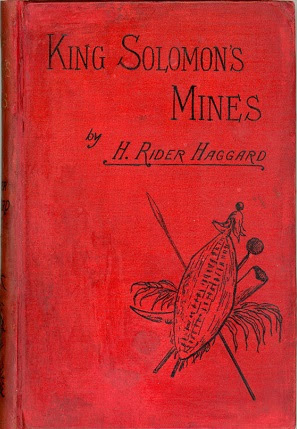
With the completion of works by Avon/Equinox SF Rediscovery authors, I moved on to novels published in the Delphi Classics Kindle series.  First came H. Rider Haggard's world changing adventure novel King Solomon's Mines.  Published in 1885, it set off a chain reaction that continues to this day.  The lost world adventure novel never seems to grow old with many readers (including this one), and so many major writers have used Haggard as a springboard to fame and fortune.  Conan Doyle, Edgar Rice Burroughs, A. Merritt and dozens of others have virtually copied Haggard's premise, though much of it written today takes place off world or in other dimensions.  Allan Quatermain is the main narrator, and his adventure, though not quite plausible today, was more than plausible in 1885, when much of Africa was still unexplored, and survey flights were decades away.  The book is a classic tale in many ways, though it's colonial outlook and racist beliefs (Quatermain is a lion and elephant hunter and certainly believes that Blacks are not the equal of Whites) seem almost beyond belief to enlightened readers today.  So one must read this as a child or youth from 1885, and I'm certain that a few small heads nearly exploded with excitement back then.  There is a running joke about one of the white explorers' white legs, which are astonishing to the Blacks.  And by the end of the novel, the Blacks have proved to be as brave and fearless in battle as any white man, excepting Quatermain himself, who is an admitted coward.  Despite the human and animal body count, it is a first rate adventure novel.  It is still in print today, which says something about its effect on readers.

Cover of the 1st edition. 
 
Next I jumped all the way over to Dashiel Hammet, and his novel from 1929, The Dain Curse. This story consists of three novellas, linked by characters, though pretty much complete in themselves.  The first part deals with a suicide and murder, in which Hammett's unnamed private detective first arrives on the scene to find missing stolen diamonds.  His case switches in part 2 with more murders, and a strange cult that has more at heart than people's spiritual welfare.  Lastly comes more murders, a kidnapping, and a bomb explosion.  As each part of the case ends, the detective always suspects there is more to it, until, by the end of part 3, we finally get to the rotten bottom of things.  At the heart of story is young Gabrielle, who thinks she is the recipient of a family curse.  Each novella ends with a lengthy explanation of the very complicated plot up to that point, with the final explanation the longest and most complicated of them all.  Though it is a fun read, it is not really one of the great mystery stories, mainly due to the large number of main characters and the complications that ensue.  One of the best parts of the story occurs in Part 3, when the detective talks Gabrielle into believing there is no curse upon her, and that she can kick her heroin habit if she wants to, with his help.  In this part at least, the sun is shining briefly on a very depressed and lost soul.
 
W. H. Hodgson's Carnacki, The Ghost-Finder is a collection of six short tales published in 1913.  They were previously published in magazines between 1910-12.  He reissued the set in 1947, adding two more stories (not reviewed here yet).  Carnacki sometimes finds a supernatural cause for what has occurred, but just as often is able to come to a rational and scientific explanation.  Thus the reader never knows at the time if events are supernatural or not.  This is a pretty neat writing trick!  The stories are quite frightening, too.
"The Gateway of the Monster" is the first tale.  The set up is always the same: four guests come to Carnacki's house for dinner, one of whom is the narrator, after which the host tells his most recent tale.  This is the story of a haunted room.  Something about the room is serving as a gateway for an evil presence to make itself known.  Carnacki himself, though a very brave man, is not above being very, very afraid at climactic moments, and sometimes even running away.  And though he often gets to the bottom of a mystery, sometimes he cannot explain it.  This story involves a mislaid ring. 
"The House Among The Laurels" is another very scary tale, and even though there are explanations at the end, they do not really satisfy the reader.  No one knows how the candles were put out, or why someone went to so much trouble to 'haunt' the large house.  Three dogs die violently in this story, and in the previous one a cat.  Animal lovers be warned. 
"The Whistling Room" is a very strange tale about a horrible whistling sound that comes from one room in a castle.  Again the climax is very frightening.  Most of these would make great TV episodes for a horror anthology.  And why has no one made a film about Hodgson's The Night Land
"The Horse of the Invisible" has something to do with local old tales, as many of these stories often have.  Not as scary as the first three, and again the explanation hardly explains everything that happened.  And can everyone who fired a gun in this story have missed the culprit?  This is a story that has both a hoax at its heart, and a real ghostly event.
"The Searcher of the End House" is another story that has both a logical explanation for a haunting, and a supernatural one.  Thus there are two mysteries, one quite terrifying and the other more mystifying.  The first mystery is Lovecraftian, while the second one is a classic ghost haunting.
"The Thing Invisible" is the final story in the first collection.  A butler is seriously wounded by a dagger that seemed to fly out of nowhere from inside a small chapel attached to a castle, and Carnacki is called to help solve the mystery.  Once again he spends a very scary night inside a dark and dangerous place, and once again he runs out of it, terrified, in the middle of the night.  The mystery is finally solved, however, and the ghost-finder lives to tell the tale to his friends.
 
Next came Fergus Hume's Madame Midas, from 1888.  A sprawling Victorian novel, it is a thriller that is loosely based on a real woman, one who owned and managed mines in Australia.  Despite the usual warnings concerning the man she is about to marry, she goes ahead with her plans.  Of course he turns out to be a louse, and causes her nothing but grief throughout the novel.  Not only that, but another man, an escapee from a French prison island, worms his way into her confidence and is offered a job managing her books.  What could go wrong?  She is not the only female in the story who is wronged.  It would appear that there are a lot of dangerous predatory males out there.  Can this possibly be true?  It is a pretty decent novel, and its 400+ pages go past quite quickly.  A few years transpire between the opening scene and the finale.  References are made to the author's previous detective novel, The Mystery of the Hansom Cab.  In fact, the lead woman here ends up renting the same house where much of the plot of the previous novel was centered.  A neat writer's trick to get readers to read the other novel, if they haven't already.
 
Finally, I read another American dime novel by The Old Sleuth.  A Successful Shadow is from 1885, and is a direct sequel to the one I read last month, called Two Wonderful Detectives.  These short mystery stories are actually quite fun and worth seeking.  I bought a small collection of this for pennies on Kindle, but they seem to also be available on Project Gutenberg, on-line for free reading.  In this story the detective is finally able to restore a large inheritance to its rightful owner, after a considerable battle of wits against a young criminal.  The detective, like a certain other later detective, is a master of disguises.  I look forward to reading more of these creations.
 
Mapman Mike

Sunday, 31 July 2022

July Reading Summary

It continues to be warm and extremely dry.  Our area has not had a good rain since June 14th.  Usually August is a very dry month, so I am worried.  The soil is cracked and hard as rock.  We keep a large bowl of water refreshed for the birds and squirrels, and it gets constant use.  I usually set up the bird bath in summer, too, but Avian flu scares have held me back, though I continue to feed the birds.  Rather than have them gather all in one area to feed, I scatter seed in about ten different areas in the front yard.  I have fed birds here for over 30 years now.  Generations of them.  Though I have cut back lately, I hate to stop.

In reading news, besides my 8 books related to Avon/Equinox SF Rediscovery authors, I got through 3 other books, all epic in their own way.  Robert Silverberg always leads off the month, and this time around came Tom O'Bedlam, a post-apocalyptic tale that I awarded 4 stars.  Basing his story around an old folk tale/poem, Silverberg has created some of his deepest characters, and reading this book was fun from start to finish.  There are at least 4 main stories at the beginning, and they all gradually come together by the end.  The overall story is mostly tied to Tom, a wandering man who is considered crazy by those who meet him.  Tom has visions, or dreams, even when wide awake, and these involve clear images of alien worlds and suns, and the aliens that inhabit them.  He is predicting that soon a time will come when people will leave their Earthly bodies behind, travel through the stars to other worlds, and live happily ever after.  It was one of many long books that came up this month (thus the lower number of overall books read), and came out in 1985.  Recommended reading, and a fascinating addition to the post nuclear genre of SF.

Kilobyte is from 1998, and is another formulaic story by Piers anthony.  Many of Anthony's later books seem like they were written by a robot.  Obviously he goes on auto-pilot much of the time.  This is the real tragedy of being a professional writer; if it is your livelihood, you have to write all the time, even when you can't any more.  Anthony's formula for much of his later writing is on full display.  Start on an adventure.  Hit an obstacle.  Go through a complete thought process of the person afflicted, covering every single angle of problem, while standing there.  Figure out the best way to deal with the current problem.  Move on.  Encounter new obstacle.  Repeat complete thought process.  Figure out way to deal with problem.  Move on.  Encounter new obstacle.  Repeat and repeat and repeat and repeat.  There, we've now covered most of the first chapter.  And on it goes.... 

As usual, Harry Harrison comes along and restores my faith in professional writers!  From 1998 comes Stars and Stripes Forever, a fascinating 345 page novel about a possible different outcome of the American Civil War.  Harrison, one of the best writers of SF and adventure fiction, has outdone himself in this fascinating tale of 1861, with just a few differences to what actually occurred.  Instead of Albert, Queen Victoria's husband, settling a touchy matter between the British and the Americans with diplomacy as happened in actual history, Harrison has him die three weeks earlier than he did, from typhoid fever.  Which means he was not there to calmly settle a dispute between England and America.  With hotter heads now in charge of the British Empire, they declare war on a ravished America, and promptly invade America both from Canada and from the south, in Mississippi.  This is amidst the Civil War, and just after the battle of Shiloh, where over 20,000 Americans killed one another.  The British come out stinking in this historical fantasy, so it may not be read through completely by blue blood British conservatives.  However, the rest of us have a jolly good time reading this wonderful and detailed look at a possible American history.  Part one of a three book series, I imagine the British will get some revenge in book 2!  Highly recommended!!

Treasure is the 5th Fox novel by Kenneth Bulmer.  The irascible Mr Fox is back in another series of adventures.  In the last book he had just lost his temporary command, as well as his hopes to become a captain in the British navy.  He is stuck at 1st lieutenant, and going nowhere else.  He is back on board the Raccoon, with many of his mates still with him. but the new captain has also brought along many of his own men.  When the Raccoon is wrecked in a storm, Fox goes off in pursuit of a secret treasure!  From 1973, the adventure is 139 pages long.  I am truly enjoying these short novels of a poor man with no title trying to make his way up in rank in the early 19thC British navy.  What a premise!  Great stuff!

Next came a collection of short stories by E C Tubb, under the overall title The Wonderful Day, which was a short story written for the collection in 2012.  But the better stories come from the 1950s and 1960s.  The best of the bunch is called "The Tea Party."  From 1953, at only 9 pages long it has become for me the most devastating account of war I have ever read.  A must to read.  Also of note are "An Era Ends," about the end of religion on Earth, and "Decision," about a doctor's decision on who to save, and who to let die.

From 2005 comes Jack Williamson's last novel, The Stonehenge Gate.  It is also one of his very best!  The book seems to summarize his output as a SF writer, and makes a fitting capstone to an incredible career lasting until the age of 96, when this book was published.  Not only does the story recall many of Jack's other tales, going all the way back to the early pulp stories, but we can read here all of the writers who influenced him.  Edgar Rice Burroughs, H Rider Haggard, A Merritt, Olaf Stapledon, and many others can all be found in this final epic of his fabulous creative output, along with Jack himself from early days.  There is even a good dose of Philip Jose Farmer, especially his World of Tiers series.  Highly recommended!

Michael Moorcock's 2nd Oswald Bastable book came next, The Land Leviathan, from 1974.  The author's multiverse ideas are in full swing in this series about a British soldier from the early 1900s that is not only transported to different times, but also to alternate versions of Earth.  In this story, a plague kills much of the white race, and Bastable joins an all Black militia to help them conquer America and bring racial balance and justice to that land.  Many of these books by Moorcock bring to mind the best pulp writing of Edgar Rice Burroughs.  Though this book is short, a lot happens!  A fun series.

Lastly came Barry Malzberg's The Remaking of Sigmund Freud. Written between 1979-1984, and published in 1985, this 275 page novel will make you think about Sigmund Freud in a whole new way.  A most unusual addition to Malzberg's SF oeuvre, in this one we do go to outer space, and even meet aliens.  Aliens that need psycho-analysis.  From the reconstituted man himself.  Malzberg must have had some fun with this one, even though it took him years to complete.  I'm so glad he stuck with it.  It was not a novel I sat and read through in one or two sittings.  I took my time.  Each chapter has its rewards, and the book should not be rushed.  One of his best!  And it wins best cover of the month!

Cover of the month by Barclay Shaw. 

The World's Great Railway Journeys, by Brian Solomon, is a coffee table book that was a gift from Jenn G, who works at a bookstore in Cambridge (Ontario).  The book lived on our coffee table as I undertook each journey in its colourful pages, reading it over a period of about three months.  I would read one journey at a time, and often do more research on the internet afterwards.  Deb and I have only managed two of them; the Santa Fe Chief between Chicago and LA (and back), and the train from Madrid to Barcelona (and back).  I finished the book this month, and passed it on to my father in Sudbury.

A Plague of Angels was a 560 page SF/fantasy novel by Sherry Tepper, loosely related to her much more poorly written The Waters Rising.  While still heavily influenced by Tolkien, this is a fairly successful mix of fantasy and SF.  However, much of the book seems to be written with children in mind, while another good portion is for adults.  So is she trying to accomplish too much in one epic?  Appeal to children and adults, and write fantasy and SF?  I think yes.  I would not recommend the book, nor have any inclination to reread it.  But it is now off my shelf, and on its way for trade.  I recently brought a box of books up to Sudbury to trade at Bay Used Books, and received $36 credit.  I bought Name of the Rose in hardcover for my parents, and gave the remaining credit to my dad. 

The final novel for this month was another epic.  It was called Dawn.  From 1884, it was H Rider Haggard's first novel (he was 27 or 28).  At the center of the novel is Angela, a pure white lily of a girl whom we first meet at her birth, which killed her mother.  Her father rejects her, and she leads a lonely existence.  Jump to nine years old, when her education is taken up by the local vicar.  Next she is 20, and about to fall in love.  So essentially this is a love story, but alas, it is a very cruel one.  No one comes out unscathed.  And while Angela is by far the most trusting character in the novel, her lover turns out to be quite a cad.  I have several reasons for disliking him, despite the fact that I am supposed to cheer for him.  So I think Haggard went way overboard in trying not to make him too goody good for his own good.  He obviously does not deserve Angela, and I was quite surprised and more than a bit disappointed by the ending (a most traditional one).  It was fine to read, however, despite the 76 chapters!  There are a few hints at other-worldly doings, even in this first story by the man whose fantasy adventure writing I have admired for much of my reading life, but his 2nd novel promises to jump right in there.  Can't wait!

Mapman Mike